
Bali: Ubud, the Temples and the Sea
Bali is a largely Hindu island in Indonesia, the world's largest Muslim-majority country, where the subak irrigation system and a busy ceremony calendar still shape everyday life.

Bali is a predominantly Hindu island in Indonesia, which is the world's largest Muslim-majority country. Its temples, family shrines, cremation towers and processions are part of ordinary life rather than something kept separate from it. A temple gate might close for a ceremony, traffic can stop for a cremation procession, and farmers will follow a ritual calendar about as closely as they follow a weather forecast. Most visitors base themselves in Ubud and then head west to the sea, north into the rice country or south to the cliffs. Five days is enough for the main sights, as long as you do not try to cover every corner at once. Add a sixth day if Sidemen, Tirta Gangga and Besakih matter to you.
Tanah Lot: the sea temple and the purification ritual
Pura Tanah Lot sits on a rocky promontory about 22 kilometres west of Ubud. Without heavy traffic the drive takes roughly 45 to 70 minutes. Foreign adults normally pay 75,000 rupiah and children about 40,000 rupiah, with a sarong included. Parking costs a few thousand rupiah. Public hours are usually around 7 am to 7 pm, though religious events can run later. Come at opening if you want space around the main shrine. By late afternoon the tour minibuses have filled the car park, the causeway gets crowded and people end up sitting shoulder to shoulder along the wall facing the sea.
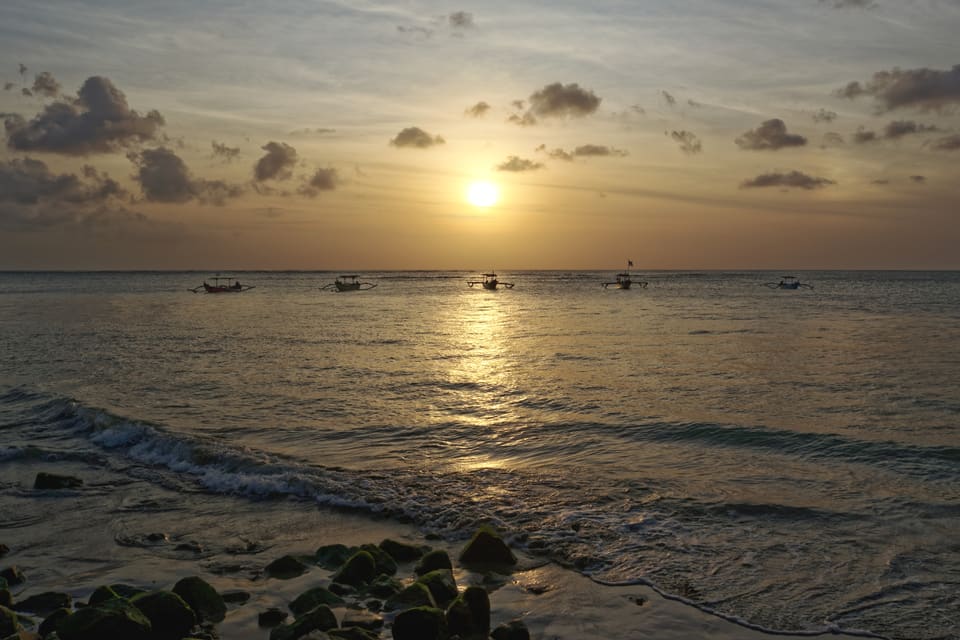
Tanah Lot is tied to melasti, the Balinese purification ceremony in which communities carry offerings to the sea. The largest melasti gatherings usually happen in March, but the dates move with the Hindu calendar, and smaller ceremonies take place at other times. The ritual can involve prayers, offerings of fruit, flowers and woven palm leaves, and people entering the water to purify themselves. Visitors are not automatically entitled to join the central ritual. During an announced public ceremony, ask a temple attendant where visitors may stand, wear a sarong over your clothes, keep your voice down and never step between worshippers and the offerings. Do not photograph close-up prayer scenes without permission.
You may be pointed towards a designated purification area, but go into the water only if a priest or attendant tells you to. If you want to take part rather than watch, bring a change of clothes, a dry bag and a small offering of about 20,000 to 50,000 rupiah. Never move another person's offering, touch a shrine or wash away ceremonial food. Sunset draws the biggest crowds because the temple faces west, and it is also the least comfortable time to leave. Getting out of the car park can take 30 to 60 minutes. For a calmer visit, come near opening or between 3 pm and 4 pm, and expect to pay the parking attendant in cash.
Ubud: the palace, the monkeys and the evening dance
Puri Saren, also called the Ubud Palace, is the old royal residence in the middle of town. Most of the present complex dates from the 18th and 19th centuries, and today it works as a cultural site and museum. Foreign adults pay about 50,000 rupiah, and the usual opening hours are 9 am to 6 pm. The interesting part is the courtyard between the gates, where the royal family still holds ceremonial functions. The admission fee does not cover the dance performance. Expect to pay roughly 75,000 to 100,000 rupiah for a seat, depending on the performance and the seating category.
The Sacred Monkey Forest Sanctuary is a 700-metre forest path with three small temples and roughly 1,200 macaques. A foreign adult ticket usually costs 100,000 rupiah, and children around 50,000 rupiah. Go early, while the paths are quiet, and keep food, plastic bottles and loose objects out of sight. These are wild animals with a clear interest in sunglasses, phones, bags and anything that looks edible. Do not feed them and do not crouch beside one for a photograph. If a monkey takes something, let it keep it and alert staff. Trying to grab it back is how people get bitten.
The Ubud Palace dance usually runs in the early evening, commonly around 7:30 pm, with a later performance at about 9 pm on busy nights. Check the board near the palace on the day, because times and programmes change. The show draws on several Balinese dance forms, including Legong and episodes from the Ramayana. Arrive 30 to 45 minutes before the start. It is performed outdoors, so a rain plan is sometimes needed, and temple clothing rules are stricter than in an ordinary restaurant. Shoulders and knees must be covered, and the sarong provided is normally long enough to wrap over a skirt or shorts.
Tegallalang: the rice terraces and the entrance scam
Tegallalang lies about 5 kilometres north of Ubud. The main roadside entrance has commonly charged 25,000 rupiah, with a separate small parking or donation charge of roughly 10,000 to 20,000 rupiah. Keep small notes handy and ask for a receipt. The real scam is usually a change of gate rather than an invented religious fee. A driver or tout may steer you to a side entrance, claim the official gate is closed or insist that a 50,000 to 100,000 rupiah donation is compulsory. That route tends to lead to a photo seller, swing operator or unofficial terrace owner rather than the main ticket booth. If you have paid at the official entrance, do not pay a second general admission charge.
Swing and photo packages cost roughly 50,000 to 150,000 rupiah each, depending on the apparatus and whether a worker climbs into the frame with you. Those are optional extras, not a condition of entry. Inside, the valley is working farmland. Stick to the signed path, expect mud after rain and stay out of planted terraces without permission. A slow walk through the main valley takes 60 to 90 minutes. The highest viewpoints are not always the best, because they show more car park than landscape. Bring water, insect repellent and shoes with grip. If a driver offers a return time, agree the meeting point and price before setting off.
The subak: a thousand-year-old system that still moves the water
The subak is an irrigation cooperative run by farmers, and the Balinese rice landscape built around it is more than a thousand years old. The wider subak cultural landscape joined the UNESCO World Heritage List in 2012. There is no single national system. Every village, or cluster of villages, has its own association, rules and allocation arrangements. Farmers help clean canals, maintain tunnels and coordinate planting cycles so the upper fields do not take all the water before it reaches the lower ones.
Water usually starts at mountain springs, crater lakes or higher river sources, then travels through stone channels, tunnels and shared canals. Temple ceremonies mark the spiritual side of the system, while physical gates and field channels decide how the water is actually divided. The water temples are not simply reservoirs. They are places where ritual, community decisions and the yearly work of repairing the landscape come together. Crop choice and fallowing are planned around the supply, which is why a farmer may leave a field fallow rather than plant it without enough water.
“Water is shared before it reaches the field. If one farmer takes too much, the canal at the bottom of the valley runs dry.” Made Wirawan, a subak elder in Tegallalang, said this while checking a spillway.
Jatiluwih, north of Ubud and closer to the main source channels, is a practical place to see the system at work. The main entrance is usually around 25,000 rupiah. A small-group guide commonly costs 300,000 to 600,000 rupiah, while higher-priced tours include transport, lunch and visits to water temples. Check the list before agreeing to a figure. Stay on public paths, do not swim in the irrigation canals and do not enter fields being worked. Banks can be steep and slippery, and they are home to snakes and water buffalo. Early morning gives the best view of the work, because farmers are often already checking gates and cleaning canals.
Besakih, water temples and Tri Hita Karana
Pura Besakih, often called the Mother Temple, sits on the slopes of Mount Agung about 45 kilometres northeast of Ubud. The road from Ubud takes 1.5 to 2 hours, and Sidemen is a more useful base if you are visiting several eastern sites. The complex holds major temples including Pura Agung, Pura Jagat Natha and Pura Panataran Luhur, linked by roads and several hundred steps. There is no expensive all-inclusive ticket. Small entry, parking and donation amounts of roughly 10,000 to 20,000 rupiah may apply at different compounds, and donation boxes sit near the inner shrines.
The best-known purification temple is Pura Tirta Empul at Tampaksiring, where a spring feeds a series of bathing pools. A foreign adult ticket is generally 50,000 rupiah. Visitors can join the purification queue and pass under the water spouts, usually wearing a supplied sarong or their own. Do not use soap, throw coins, push into the queue or leave a bag where someone has to step over it. Some sites post restrictions on entry for people who are menstruating. If you see such a rule, follow it rather than arguing at the gate. Tirta Gangga near Sidemen is another working water complex, usually 50,000 rupiah, with a tiered garden, pools and public bathing areas. Goa Gajah, closer to Ubud, charges about 30,000 rupiah.
Tri Hita Karana, the principle behind much of Balinese temple geography, describes three relationships: between people, between people and the divine, and between people and nature. Mountains provide water and a sense of spiritual direction. Springs and lakes feed communities. Rice fields are an expression of cooperation, while sea temples mark the boundary between land and ocean. Once you understand the principle, it makes sense that a small shrine beside a canal matters as much as a monumental temple. It also explains why visitors are asked not to pollute the water, walk into restricted fields or treat worshippers as part of the scenery.
Uluwatu: the cliff temple, surf and the kecak fire performance
Pura Luhur Uluwatu stands roughly 70 metres above the Indian Ocean, about 25 kilometres south of Ubud. Allow 60 to 90 minutes in traffic, and more if you are coming from the airport or Denpasar. Foreign adult entry is normally 50,000 rupiah and includes a sarong. Parking is generally 5,000 to 10,000 rupiah. The complex opens early and closes around 9 pm, though individual areas may be off limits during worship. The clifftop paths are busy with macaques. Keep glasses and loose bags secure, do not feed the animals and stay behind the barriers near the edge.
The kecak performance is usually held at 6 pm and 7 pm, with tickets commonly 100,000 to 150,000 rupiah. Central seating sells out first. Arrive 45 to 60 minutes ahead and bring a light layer, because the exposed clifftop gets cold after sunset. Kecak is a Ramayana performance built around a chorus of human voices. The torches and fire are part of the production, not an invitation for visitors to join in. Rain, wind or unsafe conditions can change or cancel a show, so check before arranging transport. The nearby Padang Padang, Bingin and Uluwatu beaches are surf beaches with powerful currents. Check the lifeguard flags, because no flag is not an all-clear. Stay in Uluwatu if surfing is the main reason for the trip.
Sidemen and Munduk: rice country beyond the villa districts
Sidemen lies about 45 kilometres east of Ubud and takes 1.5 to 2.5 hours by road. Of these places it is the closest to the quiet rice country that visitors describe: large villa developments have not spread through every village, and the roads still run between fields, weaving houses and family compounds. The valley is known for songket and ikat weaving, and Tenganan, one of Bali's oldest communities, makes a short side trip. Do not treat people working at their looms as photo subjects without asking. Hire a bicycle for the flatter lanes, but use the main roads when traffic picks up.
Family homestays and simple guesthouses in Sidemen usually cost 150,000 to 400,000 rupiah a night, often with breakfast. Sidemen Homestay is a practical example, while the village guesthouses along the main road offer simpler rooms. Local warungs charge roughly 30,000 to 70,000 rupiah for a full meal. Munduk is 35 kilometres northwest of Ubud, about 2 to 2.5 hours away, with cooler air, mountain views and lodges usually costing 200,000 to 600,000 rupiah. It is quieter than Ubud but not undiscovered. Breezer Cafe on the main road is a convenient stop, with meals around 70,000 to 150,000 rupiah. Avoid trying to see both Sidemen and Munduk in one day; they are on opposite sides of the island.
Nusa Penida: the overloaded day trip
Nusa Penida is part of Klungkung Regency and Bali province administratively, but it is a separate island. Fast boats run from Sanur in about 30 to 45 minutes in good conditions and can take longer in a choppy sea. Ordinary boats take around 1.5 to 2 hours and depart less often. A day trip from Ubud, including transport and boat tickets, usually costs 700,000 to 1,500,000 rupiah per person. Private speedboats cost more, often 1.5 million to 3 million rupiah for a return trip. Foreign visitors must also account for Bali's 150,000-rupiah tourist levy unless it was already paid or bundled. Some island attractions collect about 35,000 rupiah in local entrance charges, and parking commonly costs another 5,000 to 20,000 rupiah.
The overtourism on Nusa Penida shows in the morning traffic jams at Sanur, the long queues for boats, the full car parks at Kelingking and the large groups that all reach Crystal Bay at the same time. Narrow roads now carry tour vans, scooters, rubbish trucks and residents competing for the same space. Water supply and waste collection cannot keep pace with visitor numbers. Anchoring and swimming have damaged parts of the reef, while animal rides and photo props add pressure at already crowded sites. Broken Beach and Angel's Billabong have closed after landslides, so an itinerary that promises both may be working from an old map.
A full day on the west coast from Sanur can involve 50 to 70 kilometres of narrow road, hairpin turns and a 10 to 12 hour return to Ubud. Choose two or three stops rather than trying to tick off every photograph. Crystal Bay and Kelingking can be combined with careful timing, but Broken Beach adds a long detour and may be closed. Wear a helmet if you hire a scooter, and carry a valid licence and international permit. Do not swim below the Kelingking cliff, especially after rain, and do not attempt unmarked cliff jumps. Boat services can be cancelled for wind and waves, so check refund terms before buying a non-refundable ticket. One night on Penida is less rushed than the standard day trip and lets the roads settle after the morning boats arrive.
A practical five-day plan, with an optional east-coast day
Day one: Tanah Lot near opening, then Puri Saren and the Monkey Forest in Ubud. Stay on for the Ubud Palace dance that evening. Day two: Tegallalang at opening, Jatiluwih for the subak landscape, then Tirta Empul in the afternoon for purification. If you are not using a driver, choose two of those three rather than rushing between them. Day three: Uluwatu Temple in the morning, a surf beach or Padang Padang, then the evening kecak performance. Day four: Nusa Penida, or Munduk if you would rather spend the day inland.
Add a separate east-coast day for Sidemen, Tenganan, Tirta Gangga and Besakih. Leave Ubud around 7 am, reach the Sidemen area by 9 am and allow at least two hours for Besakih. A private driver is the practical way to link these sites. Five days is workable for the main circuit. Six is better if you want time to walk, eat without a schedule or return to one place when the weather changes. Do not build a plan around sunset at Tanah Lot, kecak at Uluwatu and a Nusa Penida boat on the same day.
When to go
April to October is the main travel period, and May and June often give the best chance of green rice across the terraces. July, August, Christmas and the New Year bring heavier traffic, higher room prices and busier temple paths. November to March is wetter, with sudden downpours that can flood the roads around Munduk and Sidemen. Nyepi, the Balinese day of silence, usually falls in March. The island shuts down, airports close and many businesses stop, so it is a special trip rather than an ordinary holiday. Galungan and Kuningan also bring large processions and temple crowds. Book fast boats and kecak tickets two to four weeks ahead for peak dates.
Getting there and getting around
Most flights arrive at Ngurah Rai Airport in Denpasar. In light traffic the airport is about 45 minutes from Ubud and 90 minutes from the south, but leave at least 75 to 120 minutes for Ubud and two hours for the southern coast during busy hours. Ride-hailing pickup is in the designated arrival area, not outside the terminal. A private driver for a 10-hour day costs roughly 800,000 to 1,200,000 rupiah, plus tolls and parking. A driver for the east-coast sites will cost more because of the distance. Renting a scooter usually costs 100,000 to 150,000 rupiah a day, but you need the correct licence, an international permit, a helmet and confidence in heavy traffic and rain.
What it costs
Ordinary temple entries usually range from 15,000 to 75,000 rupiah, and most include a sarong. Some examples: Ubud Palace at about 50,000 rupiah, Monkey Forest at 100,000 rupiah, the Ubud dance at 75,000 to 100,000 rupiah, Tirta Empul and Tirta Gangga at about 50,000 rupiah, and Uluwatu at about 50,000 rupiah. Kecak tickets are commonly 100,000 to 150,000 rupiah. Keep 10,000 and 20,000-rupiah notes for donation boxes and small shrines. A simple meal costs 30,000 to 80,000 rupiah, while a tourist restaurant in Ubud may charge 150,000 to 400,000 rupiah before drinks.
For five days, allow roughly 3 million to 7 million rupiah excluding flights if you use a mix of guesthouses, local restaurants and hired drivers, and include a Nusa Penida trip. A private car every day, upscale Uluwatu hotels and speedboats can push the total above 10 million rupiah. Ubud rooms range from about 150,000 rupiah for a simple guesthouse to 400,000 to 900,000 rupiah for a better hotel, while large villas cost more than 1 million rupiah. Sidemen remains the least expensive of the main bases, generally 150,000 to 400,000 rupiah a night. Carry cash for temples, parking and warungs, and use bank-operated ATMs rather than standalone machines.
Where to stay and where to eat
Choose Ubud for culture, Uluwatu for surf and Sidemen for quiet. Ubud puts the palace, dance, galleries and workshops within walking or short taxi distance, but it becomes noisy around the junction and central market. Uluwatu suits people who want to walk to the cliffs or surf, although cliff-view rooms can cost 500,000 to 1.5 million rupiah or more. Sidemen offers the simplest rural stay and the best value among the three. Munduk suits walkers and people who want cooler weather, not those expecting empty roads.
In Ubud, Warung Babi Guling Ibu Oka 3 serves roast pork for roughly 60,000 to 90,000 rupiah and usually has a queue, while Nasi Ayam Kedewatan Pak Malen is a cheaper chicken stop at about 30,000 to 50,000 rupiah. Yellow Flower Café is useful for a simple breakfast or lunch. Sidemen's roadside warungs generally charge 30,000 to 70,000 rupiah, and your homestay can tell you which ones cook to order. Munduk's Breezer Cafe is convenient before the drive back, while simple Uluwatu warungs serve meals for 50,000 to 100,000 rupiah. In Jimbaran, seafood by weight is possible but costly; ask for the price per kilo before ordering.
Temple rules and a warning worth reading
Sarongs and temple clothing rules are enforced. Keep shoulders and knees covered, remove shoes where indicated, do not climb shrines and do not step over offerings. Most temples lend a sarong, but sizes are limited and a wet one is not pleasant. The small temple donation boxes are not really optional: at some sites, having 10,000 or 20,000 rupiah on you is the difference between being allowed to proceed and being sent back to the entrance. The entrance ticket does not replace the donation. Menstruation restrictions are posted at certain water temples and should be followed without argument. Photography during prayer is restricted as well.


Bali: Ubud, the Temples and the Sea, Indonesia
Do not feed, touch or tease monkeys at the Monkey Forest, Sidemen, Uluwatu or Nusa Penida. A macaque may snatch a phone, pull at a strap or bite if it feels cornered. Keep glasses secured, do not carry food in an open bag and never try to wrestle an object away from one. One specific warning for Nusa Penida: Kelingking's descent is steep, exposed and can be slippery after rain, while the cliff above the water has no safe landing. Use the marked stairs, obey closures and do not swim there. At water temples, current strength, submerged steps and wet stone are more dangerous than the pools look.
What to avoid
Avoid unofficial temple entrances, invented compulsory donations and drivers who say a normal ticket has become a 500,000-rupiah special fee. Buy swings and photo sessions only after seeing the price and the equipment. Skip animal selfies, elephant rides and roadside attractions that keep wild animals in poor conditions. Do not order illegal wildlife dishes because the seizure risk falls on the traveller. At restaurants, ask for prices before ordering fish or drinks labelled by weight, and decline an unsolicited cultural performance followed by a request for a large tip.
Do not plan every day around a sunset photograph. Traffic, ceremony crowds, rain and the long distances between Ubud, the east coast and the southern cliffs will undo a tightly timed schedule. Carry a second pair of dry shoes for temple and rice-field walking, keep temple cash separate from your main wallet, and allow at least one spare hour on island transfer days. It is better to see fewer places properly than to spend five days stuck in traffic.
From readers
Traveller experiences
Personal notes and ratings from readers who have been to Bali: Ubud, the Temples and the Sea.
Checking your session…
No experiences yet.
Sign in to be the first reader to describe this place.
Keep reading
More stories from this collection are coming.