
Nepal in October: Weather, Festivals and the Start of Trekking Season
What Nepal is actually like in October — the monsoon's end, the clearest mountain air of the year, Dashain and Tihar, and the booking realities of the busiest month.

The month the whole country has been waiting for
October is when Nepal reopens. Four months of monsoon end somewhere in mid-September, and by October the clouds that parked themselves on the hills all summer drain out of the sky, the dust and haze of the pre-monsoon months have been scrubbed from the air, and the mountains — invisible for half the year behind weather — stand over the country in the clearest light they get all year. The trekking routes fill, the cities fill, the festivals arrive, and every price that can rise does.
This is the month to explain honestly rather than sell. October in Nepal is genuinely the best weather in the travel year, and it is also the busiest, the most expensive and the most booked-out month. Both statements are true, and planning for the month means planning for both. This guide covers the weather you can expect, the festivals that move through the calendar, what each of the big treks is doing in October, and the booking arithmetic that decides whether the month is a triumph or a queue.
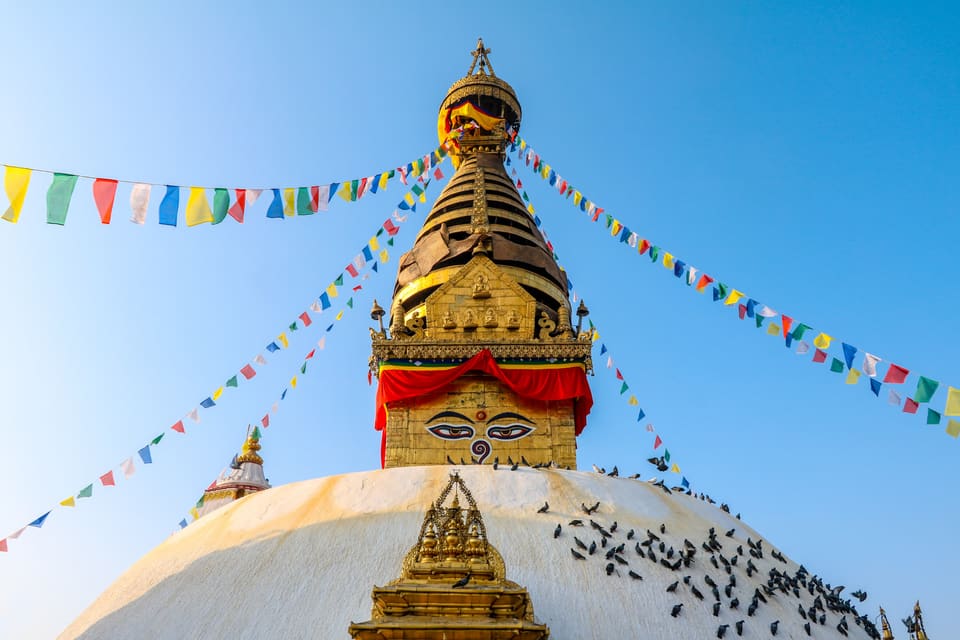
The weather: post-monsoon clarity
The mechanics first. The summer monsoon leaves Nepal from the east in the second half of September; early October can still catch a tail of rain in the Terai and the hills, but by mid-October the pattern has settled into the post-monsoon norm — dry, stable days, warm sun in the middle valleys, and the year's cleanest air. With the monsoon's haze washed out, the long-distance mountain views are at their annual best: the Annapurna range from Pokhara's rooftops, the Everest skyline from the high ridges, and the whole Himalayan wall visible on the mountain flights out of Kathmandu.
Temperatures run pleasant across the middle hills — warm days in Kathmandu and Pokhara, cool evenings — and the Terai still carries real heat: the jungle lowlands of Chitwan sit closer to summer than to autumn, and the mornings there are the best hours of the day. The variable is altitude, and October's great trekking gift is that the nights at elevation have turned cold rather than bitter: teahouse treks in the high valleys need a warm sleeping layer and a good jacket, but the deep-winter gear can stay in the duffel. Rain, when it comes at all, comes as an evening shower rather than a season. The one October weather caveat belongs to the very start of the month: trails, leech lines and landslide-prone road sections can still carry the monsoon's damage in the first week or two, and the high passes of the far-western regions hold their weather later than the mainstream routes.
The contrast with the months on either side is what October's clarity really means. Before it: September can be excellent in its second half but wears the monsoon's leftovers, and the trails are wet. After it: November matches October's mountain views with colder nights and thinner crowds once the festival travel clears, and it is a fair argument for travellers who can move their trip by two weeks. The other peak — March-April — trades some of the post-monsoon clarity for rhododendron blooms and warmer mornings, with more haze on the long views. October is the month where all the variables align at once, which is why everything else in this guide is about sharing it well.
The exceptions worth knowing: the trans-Himalayan valleys of Upper Mustang sit in the rain shadow and barely met the summer monsoon, so they stay walkable into October with the season's clearest skies as a bonus — and the permits guide covers the restricted-area paperwork they require. Chitwan in October is lush and green from the rains, which is beautiful and also handicaps the wildlife watching: the park's grasslands are at their tallest, hiding more animals than the short-grass months of late winter do. And Lumbini, in the western Terai, runs warm and quiet — the month's crowds largely pass it by.
The festivals: Dashain and Tihar
October usually carries Nepal's two biggest festivals, and this is the part of the month that no weather summary captures. Dashain, the great Hindu festival of the year — the one that empties Kathmandu as the whole country travels home to family — most often falls in this month; Tihar, the five-day festival of lights that follows shortly after, arrives in late October or early November depending on the year. Both move with the lunar calendar, so their dates shift annually; check the year's actual dates before you plan around either.
What they mean for a traveller depends on where you stand. In the cities, Dashain means kite-fighting on the rooftops, swings going up in the neighbourhoods, and Kathmandu running quieter than usual as the capital empties toward the villages; government offices and many businesses close for the festival days, which affects opening hours more than it affects visitors. The monument gates stay on their fee schedules and the sites stay open — the valley's squares during Dashain are working temples with families visiting them, which is a better sight than the same squares empty. Tihar is the photogenic one: lamps and electric lights on every building, garlands of marigold, the honoured-crow and dog days of the early mornings, and deusi singing in the evenings. For a traveller in the valley, Tihar is the best festival window of the year to simply walk a neighbourhood after dark. The trade-offs are practical: peak festival travel days put domestic transport under real pressure, and the days around the festivals are when the whole country is on the move — bus seats that sell out in hours, and the sofa buses NPR 1,500-1,700 to Pokhara booked to the last seat.
The treks in October
Every mainstream trek is open and at its best in October — that is precisely the problem. The Everest region runs its classic window: the Lukla flights fly in the settled post-monsoon weather, the trails from Namche upward carry their heaviest traffic of the year, and teahouse beds at the famous stops fill by early afternoon. The Annapurna region — the Circuit, Annapurna Base Camp, Poon Hill — is the same story with better road access: the trails are dry, the passes are clear, and the teahouse villages run at capacity. Langtang and the Manaslu Circuit, both on the mandatory-guide list like the others, offer slightly thinner crowds for the same month — Langtang's valley rewards a week, Manaslu asks for two and the restricted-area permit to match.
The month's trekking advice is therefore about margin, not route choice. Start walking early in the day — not for the views, which are guaranteed, but because the good rooms at the next village go to whoever arrives first in October. Book guides and permits through an agency in advance rather than on arrival; the guide rule of 2023 means the registered agencies are the gateway to every famous trail, and their best guides are committed first. A guide at US$25-35 a day is the same figure in October as in the quiet months — what tightens in the peak is availability, not price. And hold a weather day: October's stability makes it the most reliable month in the mountains, but flights to Lukla still wait on morning fog in the valleys even when the high routes are perfect.
The crowds and the money
October is Nepal's price peak, and the effect is visible everywhere rooms are sold. Hotel rates in Kathmandu and Pokhara rise meaningfully over their quiet-season levels; the best-value mid-range places sell out first; domestic flights book out weeks ahead and the sofa buses to Pokhara — NPR 1,500-1,700 at the 2026 quotes — fill their seats days in advance. The entry fees and visa costs never move: the visa is US$30-125 by duration and the monument gates charge their rupee tariffs as always. What moves is everything with a rate.
The mitigation is entirely about timing. Book the Pokhara flights and the Chitwan lodge packages as early as the trip exists. Travel at the month's edges — the first week carries monsoon-tail risk but thinner crowds, and the last week edges toward November's equal clarity. Avoid crossing the country on the heaviest festival travel days if the year's dates put them mid-trip. And accept the one thing that cannot be booked around: on the trail in October, the teahouse dining rooms are full, and full of people having the same good month you are.
A concrete booking order for an October trip, since the month punishes improvisation: as soon as the dates exist, lock the international flights and any domestic flight legs; three to four weeks out, book the Chitwan lodge package and the trek agency if the trip includes a famous route — the agency then issues the TIMS card and buys the NPR 3,000 park entries in advance; one to two weeks out, reserve the sofa bus seats or remaining flight legs; the valley's monument gates need nothing booked — cash in small notes buys every entry, from the NPR 200 at Swayambhunath to the US$18 at Bhaktapur. The only step that cannot be moved later is the first one, and the only tickets that genuinely sell out in October are the mountain flights and the best safari lodges.
Who October is for
For a first visit that combines the valley's heritage, a mountain outlook and the year's best chance of standing under clear Himalayan skies, October is the answer, and the ten-day itinerary on this site is built for exactly that trip. For trekkers who dislike crowds, the better months are the quieter edges of the season — early December's cold clarity, late February before the spring rush, or November after the festival traffic clears. For travellers chasing festivals specifically, the lunar calendar decides; for everyone else, October delivers the Nepal of the posters, at the price of sharing it.
One last framing for the month, because it changes how the crowds feel: October's density is not the thin crowd of a city commute — it is a season. The teahouse dining rooms are full of trekkers comparing notes, the Thamel cafés run long tables, the guesthouses put travellers on adjacent rooftops, and the month's social current runs strong enough that solo travellers who want company rarely lack it and those who want solitude have to walk further for it. The crowds of October are the cost, and for many travellers the company is the refund.
Sources: Nepal Tourism Board — tourist visa, heritage site entry fees, park entry fees and TIMS pages (ntb.gov.np, fetched 1 November 2026). Festival timing descriptions reflect the lunar calendar's moving dates; no specific-year festival dates are asserted. Bus fares from 2026 booking platforms (nepalvehiclerental.com, bussewa.com.np, 12go.asia) and flight fares from trip.com listings, retrieved 1 November 2026; temperature and monsoon-timing statements are seasonal descriptions, not measured data for a specific year.
From readers
Traveller experiences
Personal notes and ratings from readers who have been to Nepal.
Checking your session…
No experiences yet.
Sign in to be the first reader to describe this place.
Keep reading
Nepal Solo Travel: What Changes Now That the Famous Treks Require a Guide
A solo traveller's Nepal: what the 2023 guide rule means for trekking alone, where solo travel still works untouched, what it costs to travel alone, and the practical safety picture.
min read
Nepal Trekking Permits: What You Need and What They Cost
The three layers of Nepali trekking paperwork — park and conservation entry, the TIMS card, and restricted-area permits — what changed in 2023, what each one costs, and who issues them.
min read
Nepal Travel Cost: A Realistic Daily Budget for Different Travel Styles
What Nepal costs per day for backpackers, mid-range travellers and comfortable trips — rooms, meals, buses, flights, entry fees and visas, with the official tariffs separated from market rates.
min read