
Best Time to Visit Nepal: A Month-by-Month Guide to Weather, Trekking and Festivals
Autumn clarity, spring rhododendrons, winter passes and the monsoon rain shadow — when to trek, when the crowds and prices peak, and what each month in Nepal is actually good for.

Two good seasons, two hard ones
Nepal's travel calendar is built around the monsoon. The wet summer months from roughly June to September end in late September, the air clears, and the country gets four stable, dry months. That makes autumn (October-November) and spring (March-April) the two dependable windows — one for post-monsoon clarity, one for rhododendron forest and warmer mornings — while winter brings cold high passes and the monsoon brings leeches, landslides and cancelled mountain flights.
Nepal is also a vertical country, and the seasons behave differently at each level. On a single day in late autumn you can have lunch in the Terai heat, walk through frost at dawn in the middle hills, and hear that snow has closed a pass at 5,000 metres. So the right answer to "when should I go" is really "when should I go for what" — and that is what this guide walks through, month by month and region by region.
Autumn: October and November
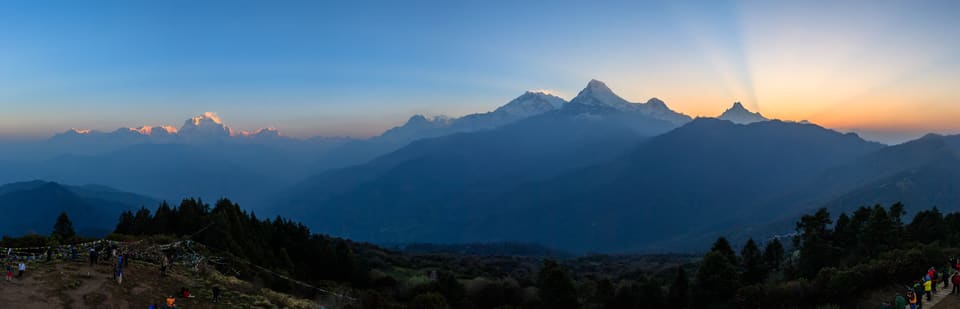
October is Nepal at its most photogenic, and everyone knows it. The monsoon has scrubbed the air, the rice terraces are still green from the summer rains, the peaks show themselves day after day, and every teahouse on the Everest and Annapurna routes is doing business. Trail conditions are at their most forgiving: dry stone steps, reliable lodge service, and the day's weather stable enough that morning plans can be trusted.
That is also the problem. October is the busiest month of the year. Lukla flights sell out weeks ahead, the trail out of Lukla and the Poon Hill viewpoint feel like a procession at sunrise, peak-season prices apply to flights and packages, and good teahouse rooms in the villages go by early afternoon. None of this ruins the trip — the season is popular for honest reasons — but it changes how you must plan: book flights and first nights ahead, start walking days early, and expect company at every viewpoint. The flight and package premiums of October are covered in our Everest cost breakdown, and they are real.
November keeps the clarity and loses some of the crush. Days shorten, the first cold snaps reach the high valleys at night, and by the second half of the month the high season is visibly winding down. For most treks and city trips, November is the better trade of the two: the same Himalayan views, quieter trails, gentler prices, and mornings that need a real jacket instead of a jumper. Trekkers heading above 4,500 metres should carry winter gear regardless, because the seasons do not switch on a date.
Winter: December to February
Winter in Nepal is dry, bright and cold. In Kathmandu and Pokhara the days are mild and sunny, the mornings crisp, and the mountain views can be at their sharpest in the thin, dust-free air — several winter mornings out-perform anything the busier months offer. Hotel prices drop, the streets empty of tour groups, and the Terai parks run comfortably warm in the daytime.
What closes down is altitude. High passes such as the 5,416-metre Thorong La on the Annapurna Circuit and the high routes around Everest become hazardous or impassable in snow, teahouse villages above about 4,000 metres largely empty or shut, and water pipes and bathrooms freeze. Winter is the season for the lower valleys — Poon Hill and the Annapurna foothills, Langtang's lower reaches, Helambu, the Kathmandu Valley's seven monument zones, Chitwan's Terai mornings — not for the big crossings.
Even on low treks, pack real cold-weather gear: the temperature gap between a midday of shirtsleeves and a dawn of frozen water bottles is enormous, and guesthouses in the middle hills are built for airflow, not insulation. Short daylight hours matter too — plan to walk by 7am and arrive by 4pm, before the temperature falls off a cliff.
Spring: March and April
Spring is the second main trekking window and the counterweight to autumn. The days lengthen, the middle hills turn pink and white with rhododendron bloom — the hillsides around Ghorepani and the Langtang valley are at their best — and the high routes reopen after winter. Temperatures at altitude are warmer than autumn, which makes the big camps more comfortable, and the mornings are generally stable enough for pass crossings.
The trade is air quality: haze builds as the pre-monsoon season progresses, so the long-distance views are softer than in autumn, and by late April the afternoons cloud over with the first storm build-ups. Everest carries its climbing-season traffic in these months — the expedition tents at base camp are part of the scenery — and the trails to Namche and beyond see their second-busiest period. For flowers, longer days and warmer nights, March and April are excellent; for glass-clear horizons, autumn wins. Trekkers who want both flowers and clarity aim for early March.
May: the waiting month
Early May can still deliver a good trek, particularly in the mornings, but it is a shoulder month trending the wrong way. Heat in the Terai climbs toward its annual peak, haze thickens over the middle hills, and the first pre-monsoon storms arrive with genuine violence in the afternoons. Climbers descend from Everest as the spring window closes, and lodge owners begin their quiet season.
If your trip must be in May, keep it high and early in the month, plan walking days to finish before the afternoon build-up, or take the trip to Mustang, which the approaching monsoon does not reach. It is also the month to be flexible about domestic flights, as afternoon weather disruptions become common.
Monsoon: June to September
The monsoon is the season most itineraries should avoid and a few should target. Rain falls most days — heavy, warm and predictable in its rhythm rather than constant — and its effects compound: trails turn to mud and leech habitat, landslides periodically cut the roads, viewplanes disappear, and the mountain flights into Lukla are the most cancellation-prone of the year. Kathmandu and Pokhara run green, dramatic and quiet, with hotel rates at their lowest and the rice paddies at their most beautiful. Travellers who do not mind wet boots can have the monuments nearly to themselves.
The exception that justifies a monsoon trip is the trans-Himalayan rain shadow. Upper Mustang and Dolpo sit behind the Annapurna and Dhaulagiri massifs, and June to September is precisely when they work — high desert, cave monasteries and the walled city of Lo Manthang under dry skies while the rest of the country drowns. Both are restricted areas with permit and agency requirements; the monsoon is when that paperwork is worth it. Trekking anywhere else in these months needs a leech-proof plan and a flexible schedule, and most trekkers simply should not.
A month-by-month shorthand
January: dry and cold; low-valley treks and the sharpest mountain air of the year; high passes shut, Terai pleasant and warm.
February: still cold, warming late in the month; quiet trails and empty lodges below 3,500 metres; a good budget month for cities.
March: spring opens; rhododendrons begin, high routes reopen, Holi falls this month most years; the best spring clarity.
April: peak spring trekking; flowers at altitude, building haze, afternoon cloud; second-busiest month on the Everest trail.
May: hot, hazy, pre-monsoon storms; Mustang is the sensible high choice; flexible flight scheduling essential.
June: monsoon arrives; leeches and road trouble begin, prices bottom out, Dolpo and Mustang come into season.
July: full monsoon; avoid trekking elsewhere, expect delays and washouts on every road.
August: monsoon continues; festivals break the grey, and the rain shadow remains the only reliable trekking.
September: the monsoon tapers; early September is still wet, but late September can be superb as the air clears.
October: the peak — clear peaks, full teahouses, Dashain; book everything early and start walking days early.
November: clarity holds, crowds ease, nights turn cold; the connoisseur's autumn month.
December: winter begins; city sightseeing and Terai parks are pleasant, high routes close, prices fall.
Festivals move with the moon
Nepal's big festivals are set by the lunar calendar, so their dates shift year to year — check a current calendar rather than last year's guidebook. Dashain, the longest and most important, and Tihar, the festival of lights, usually fall between October and November; travel around them means marigold markets, oil lamps and family feasts, but also crowded buses, closed government offices for days, and permit counters and banks running reduced hours — a practical problem if your trek paperwork depends on them. Indra Jatra brings the Kumari's chariot through Kathmandu Durbar Square in September; Holi's colour-throwing lands in spring; Buddha Jayanti fills Lumbini and Boudhanath in April or May. Planes, buses and good hotels fill up around these weeks — and so do the festival squares themselves, which is exactly the point of timing a trip to them.
Matching the season to the trip
For a first visit combining Kathmandu, Pokhara and one trek, pick late September through November, or March to mid-April — the two windows when everything works at once. For tigers and jungle, winter and spring are comfortable in the Terai, when the grass is shorter and sightings easier. For Mustang and Dolpo, come in the monsoon and enjoy the joke of visiting the Himalaya in its rainiest months. For the lowest prices and empty trails, take late November or February and pack for cold.
Mountain-flight travellers — the one-hour Everest sightseeing circuit out of Kathmandu — should aim for the same clear seasons as the trekkers, early in the morning, and hold flexible expectations: flights run when the mountain shows itself, not when the ticket says.
Whatever the month, build slack into the schedule. Domestic flights wait on weather in every season but the deep monsoon, road journeys stretch around landslides in the rains, and the trip that plans a buffer day at each end absorbs all of it. Nepal is open all year; only the altitude takes a season.
From readers
Traveller experiences
Personal notes and ratings from readers who have been to Nepal.
Checking your session…
No experiences yet.
Sign in to be the first reader to describe this place.
Keep reading
Nepal in October: Weather, Festivals and the Start of Trekking Season
What Nepal is actually like in October — the monsoon's end, the clearest mountain air of the year, Dashain and Tihar, and the booking realities of the busiest month.
min read
Nepal Solo Travel: What Changes Now That the Famous Treks Require a Guide
A solo traveller's Nepal: what the 2023 guide rule means for trekking alone, where solo travel still works untouched, what it costs to travel alone, and the practical safety picture.
min read
Nepal Trekking Permits: What You Need and What They Cost
The three layers of Nepali trekking paperwork — park and conservation entry, the TIMS card, and restricted-area permits — what changed in 2023, what each one costs, and who issues them.
min read