
Things to Do in Nepal: Experiences, Destinations and Practical Travel Advice
What there is actually to do in Nepal — the Kathmandu Valley's monument zones, treks from two days to three weeks, Pokhara and the Annapurna foothills, the Terai jungles, Lumbini, and the country's quieter corners.

Nepal is several countries in one
Nepal packs the highest mountains on earth, a medieval valley of brick and carved timber, subtropical rhinoceros jungle, and the birthplace of the Buddha into an area smaller than the United Kingdom. Within 200 horizontal kilometres the land rises from about 60 metres on the Terai plain to 8,848 metres at the summit of Everest — the most compressed elevation range on the planet, and the reason a single two-week trip can hold a sunrise mountain viewpoint, a 15th-century palace square, a whitewater river and a rhinoceros at close range.
That compression is also the practical point for planning: Nepal is not one itinerary but several, each with its own season, its own travel times and its own rhythm. This guide runs through what there is to do, honestly sorted by how long it takes, what it actually delivers, and when it works.
The Kathmandu Valley's seven monument zones
Start in Kathmandu, because that is where the airport is and because the valley holds seven of Nepal's ten UNESCO World Heritage sites within a day's drive of each other.
The three durbar (royal) squares — Kathmandu, Patan and Bhaktapur — are stacked palaces, temples, courtyards and carved windows built by the Malla kings between the 12th and 18th centuries, each once the capital of its own kingdom. Kathmandu Durbar Square carries the residence of the Kumari, the living goddess, who appears briefly at her window most afternoons. Patan, just across the Bagmati river to the south, has the most concentrated temple quarter in the country and the best museum. Bhaktapur, further east, charges a separate entry fee and rewards a full day: the pottery square where clay is still thrown by hand, the 30-metre Nyatapola temple standing on five stepped plinths, and alleys of woodcarvers who supplied the squares for centuries.
The great Buddhist stupas sit on opposite sides of the city. Boudhanath, one of the largest stupas in the world, is the centre of Kathmandu's Tibetan community — join the evening kora as the butter lamps go up and the prayer wheels spin, then climb to a rooftop café for the view over the dome. Swayambhunath crowns a hill west of the centre with monkeys, shrines and a valley panorama; the 365-step climb from the west is the proper entrance.
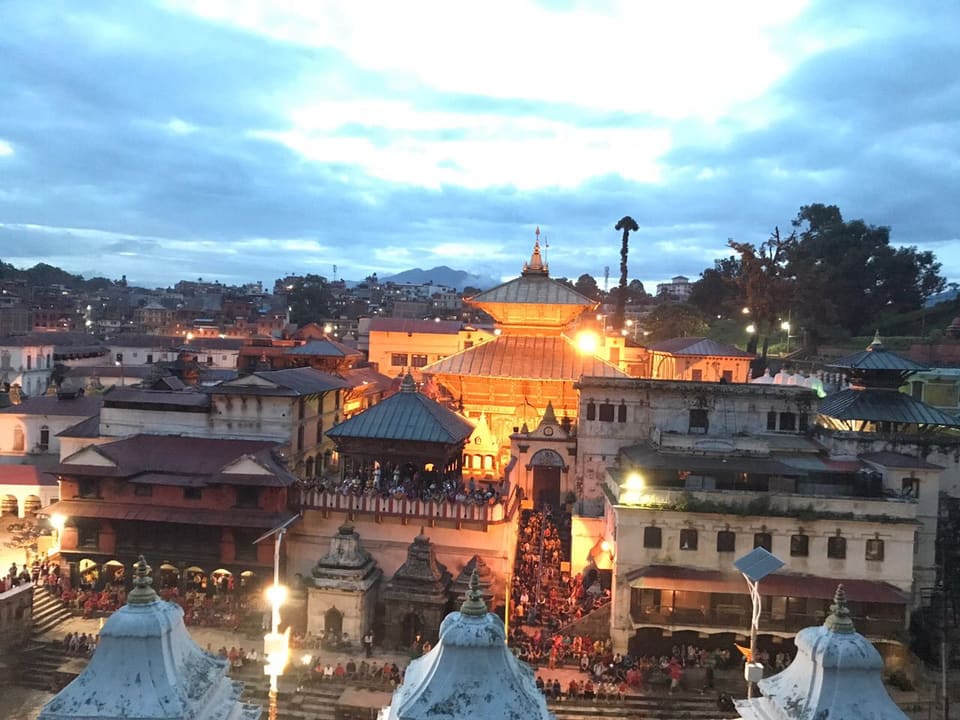
Pashupatinath, on the eastern bank of the Bagmati, is Nepal's most important Hindu temple and one of the holiest Shiva sites in South Asia. Non-Hindus cannot enter the main temple, but the experience is the riverside: cremations happen in public view on the ghats from morning to evening. Go with a guide who can explain the rituals, stand where the Nepali visitors stand, and behave like a guest at a funeral — because that is exactly what you are watching. Photography of the cremations themselves is not acceptable.
Entry fees apply at every one of these sites. They are modest — from NPR 200 at Swayambhunath to NPR 1,000 at the durbar squares and Pashupatinath, with Bhaktapur charging US$18 — per the Nepal Tourism Board's published heritage fee table, and they are collected in cash at the gate.
Trekking: from a two-day taster to a three-week circuit
Trekking is Nepal's signature experience, but it is a spectrum, not a single activity. The Annapurna and Everest regions get the fame; the practical question is how many days you have, and how much altitude you want your body to negotiate.
Poon Hill, in the Annapurna foothills, is the classic four-to-five-day trek: teahouse lodges every few hours, rhododendron and oak forest, stone steps, and a sunrise viewpoint at 3,210 metres with the Dhaulagiri and Annapurna ranges laid out across the horizon. It stays below 3,300 metres, which makes it the best choice for a first Himalayan walk, for families, and for anyone squeezing Nepal into a fortnight that also includes the Terai.
The Annapurna Base Camp trek takes seven to ten days up the Modi Khola valley and ends in a natural amphitheatre ringed by 7,000- and 8,000-metre peaks — Annapurna I, Annapurna South, Hiunchuli and the unclimbed sacred fishtail of Machhapuchhre. It shares the moderate-altitude character of Poon Hill with a genuine big-mountain finish.
The Annapurna Circuit, two weeks or more, is the grand tour: from green rice country at Besisahar up through Manang, over the 5,416-metre Thorong La, and down the other side into the arid, Tibetan-flavoured world of Muktinath and Jomsom. Roads now run up both valleys, so the modern walk uses jeeps for the road sections and walks the high trail between them.
Everest Base Camp, twelve to fourteen days from the Lukla flight, is the famous one: Sherpa villages, the market town of Namche Bazaar, the monastery at Tengboche, and the walk up the Khumbu Glacier to the foot of the highest mountain on earth. It is a serious altitude commitment with genuine risk if rushed, not a checklist item — the itinerary's acclimatisation days are not optional.
Less crowded: the Langtang valley, about a week including road transfers from Kathmandu, rebuilt with strong Tamang hospitality after the 2015 earthquake; the Tamang Heritage Trail beside it; and Manaslu, a restricted-area circuit that offers the Circuit's remoteness with a fraction of the traffic.
Since 31 March 2023, most of these routes require a licensed guide and an agency-issued TIMS card by rule of the Nepal Tourism Board's revised provision. Check the permit rules before you commit to a route — our trekking permits guide lists which routes need what, and every fee.
Pokhara and the Annapurna foothills
Pokhara is the trekking gateway and a destination in its own right. Phewa Lake carries rowboats and an island temple with the Annapurnas reflected behind it on clear mornings; the World Peace Pagoda on Anadu Hill above the lake is a short boat-and-stairs trip or a longer forest walk. Sarangkot and the hills around it launch paragliding flights over the valley — Pokhara is one of the world's established tandem paragliding centres, and the morning flights run in the main seasons. There are caves (Mahendra and Bat, under the Seti's vanished gorge), the International Mountain Museum, mountain-bike trails, and a lakeside strip of cafés that makes recovery days easy.
Pokhara rewards three unhurried nights even for travellers who never put on a boot, and it is the natural base for Poon Hill, Annapurna Base Camp and the Circuit's start.
The Terai: jungles, rhinos and tigers
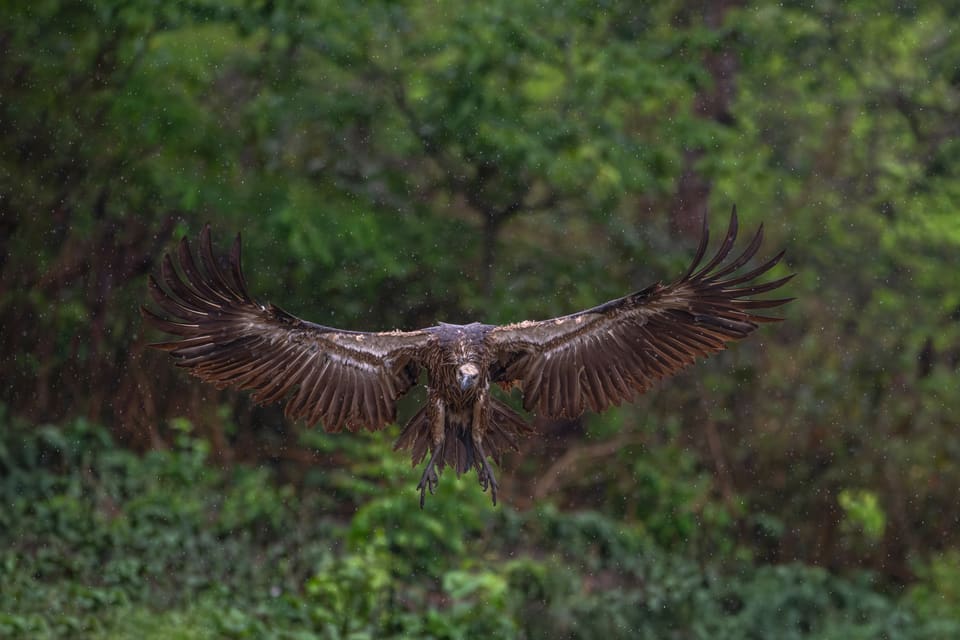
The flat southern belt is a different country — subtropical, agricultural, and home to Nepal's two flagship parks. Chitwan National Park, five to six hours by road from Kathmandu or about four from Pokhara, protects one-horned rhinoceroses, gharial crocodiles, sloth bears and a viable tiger population in riverine grassland and sal forest. A two-to-three-night stay in Sauraha or a jungle lodge handles the guiding and the park formalities: walking safaris with armed trackers, dugout canoe trips past basking gharials, jeep drives, and Tharu cultural evenings in the villages. The rhino encounters here are close and real — this is not a zoo.
Bardia National Park in the far west is bigger, wilder and the better bet for tigers, with a fraction of Chitwan's visitor numbers — if you have the days to travel there. Koshi Tappu in the east, a wetland reserve, is the specialist's choice for wild water buffalo and migratory birds.
Park entry fees apply per day (Chitwan: NPR 2,000 for foreign visitors plus VAT, per the NTB table) and safari lodges quote package prices that bundle rooms, meals and activities.
Lumbini and the Buddhist circuit
Lumbini, the Buddha's birthplace, is a UNESCO site on the Terai plain west of Chitwan. The Maya Devi Temple marks the traditional birth spot beside the sacred pond; the Ashoka Pillar of 249 BC fixes the site's antiquity in stone; and the Monastic Zone spreads more than a dozen foreign-built monasteries — Thai, Burmese, Japanese, German, Chinese — along a central canal, each in its national idiom. Lumbini deserves an overnight and a slow morning, not a photo stop from the highway. It sits naturally between Kathmandu and the Chitwan-adjacent road network, or on the overland route to India.
Beyond the classics
Upper Mustang, the restricted kingdom behind the Annapurnas, keeps a walled capital at Lo Manthang, cave monasteries cut into cliffs, and a Tibetan-Buddhist culture that centuries of border closure preserved. It needs a special permit (US$50 per person per day) and a registered agency, and its rain shadow makes it the one Himalayan region worth trekking during the monsoon.
Rara Lake in the far northwest, Nepal's largest lake at 2,990 metres, sits in a national park that sees a fraction of the Annapurnas' visitors — a flight to Nepalgunj and a long drive away, which is exactly why it stays empty. Ilam in the eastern hills grows the country's tea among rolling green ridges few tourists see. Bardia, already mentioned for tigers, doubles as the road-trip destination for travellers who want the Terai without the crowds. These are the trips that take planning and reward it.
Festivals, food and street life
Time a visit around the festivals and the cities turn into open-air events. Dashain and Tihar (October-November, lunar dates) fill the valley with bamboo swings, oil lamps, marigold garlands and family feasts; Indra Jatra (September) pulls the Kumari's chariot through Kathmandu Durbar Square; Holi (spring) is a colour-and-water free-for-all that empties every alley into the streets. The dates move with the lunar calendar, so check a current calendar rather than a guidebook — and expect buses and government offices to be affected for days around Dashain.
Nepali food is worth eating deliberately, not just conveniently: dal bhat with its unlimited refills, momos in every steamer, Newari feasts (samay baji) in the old towns of Patan and Bhaktapur, and the tea-country tea of Ilam. Street-side stalls and local cafeterias feed you for a few hundred rupees; the tourist strips charge accordingly more.
Practical advice for planning
Give the capital two or three full days for the monument zones, and Bhaktapur its own morning. Pair Pokhara with one trek or none — trying to trek and see everything leaves both rushed. Add Chitwan only if you have at least ten days total; a 10-day itinerary that fits the three hubs without rushing is set out in our 10 Days in Nepal story. Road journeys are slow — Kathmandu to Pokhara is a full day by bus, and flights between them are short but frequently full in season — so schedule by nights, not by kilometres.
The best windows are October-November and March-April; monsoon (June-September) suits Mustang, Dolpo and museum days. Where to go deeper: our Kathmandu and Pokhara guides cover the two hubs street by street, the permits guide lists every trekking fee, and the best-time guide matches seasons to regions.
Sources: Nepal Tourism Board heritage-site entry fees and park entry fee tables (ntb.gov.np, fetched 1 November 2026); Nepal Tourism Board TIMS card page for the guide requirement effective 31 March 2023 (fetched 1 November 2026); Nepal Tourism Board trekking permit page for restricted-area permit fees (fetched 1 November 2026).
From readers
Traveller experiences
Personal notes and ratings from readers who have been to Nepal.
Checking your session…
No experiences yet.
Sign in to be the first reader to describe this place.
Keep reading
Nepal in October: Weather, Festivals and the Start of Trekking Season
What Nepal is actually like in October — the monsoon's end, the clearest mountain air of the year, Dashain and Tihar, and the booking realities of the busiest month.
min read
Nepal Solo Travel: What Changes Now That the Famous Treks Require a Guide
A solo traveller's Nepal: what the 2023 guide rule means for trekking alone, where solo travel still works untouched, what it costs to travel alone, and the practical safety picture.
min read
Nepal Trekking Permits: What You Need and What They Cost
The three layers of Nepali trekking paperwork — park and conservation entry, the TIMS card, and restricted-area permits — what changed in 2023, what each one costs, and who issues them.
min read